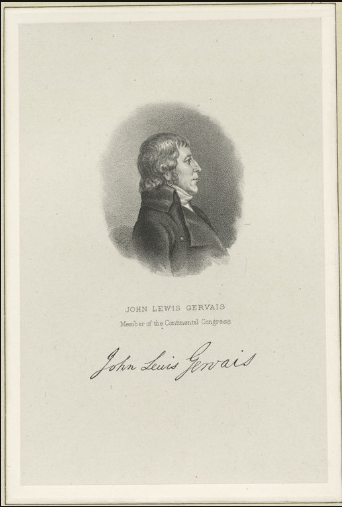
In the middle of his sixth month in York, Pennsylvania, Henry writes to his good friend and fellow Lowcountry planter, John Lewis Gervais.1 But likely still suffering from a “Severe attack of the Gout,” Henry missed home.2
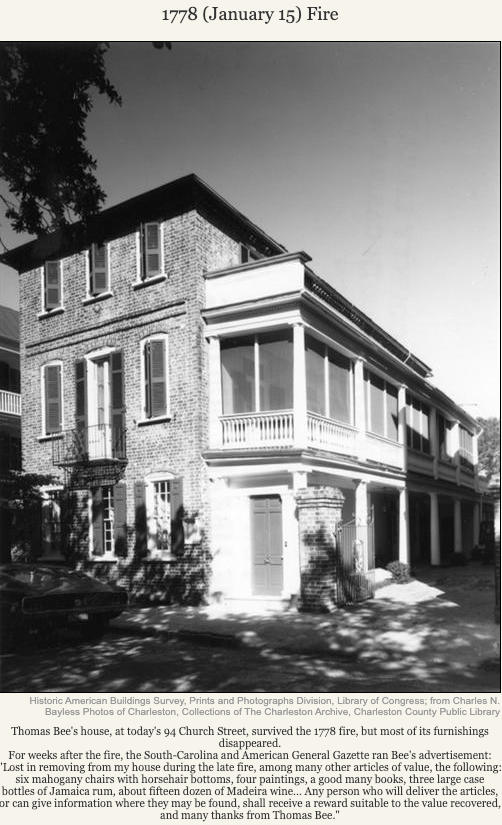
“Sympathize with me,” he bemoaned,” when I complain that near four Months have elapsed since the date of the last public or social Letter to me from Charles Town.” Thus, imagine “what I must feel” when I have read in the papers “of a wasting Fire in the Capital City of the state from when I ascended.”3 The fire, which started in a baker’s kitchen on Queen Street the previous January 15, enveloped about 250 dwelling houses in short order. Also engulfed in the flames was the South-Carolina and American General Gazette, causing the paper to miss its January 22, 1778 issue: “The Printer having been burnt out of his house in the first on the 15th instant.”4
The reports alerted Henry “enough to make me feel deeply for my fellow Citizens_ Let me intreat my worthy friend Mr. [Gabriel, the elder] Manigault & your Self to charge my Brother’s Estate & my own with ample Sums in contribution to the relief of the necessitous…. You will see what other people give & go rather beyond proportion in subscribing for me.” Henry also offered his house to those who may need lodging.
In another example of Henry’s generosity of both spirit and wallet, he explained to Gervais the pitiable situation of Louis-Casimir, baron de Holtzendorff. The Baron had been one of the earliest French volunteers to the Rebel cause. Congress commissioned him a lieutenant colonel in November 1777, but Holtzendorff had been unable to make his expenses and soon requested leave to resign and return to France.5 Henry lent him “400 Dollars to help him” return to France, “after I had learned that he had been reduced to make sale of his Silver Mounted Sword & the Epaulets from his Coat.”
- Henry Laurens to John Lewis Gervais, York, March 11, 1778, Papers of Henry Laurens, 12:539-542. All quotes, unless otherwise noted, are from this letter. Congress had been forced to evacuate Philadelphia the previous September and settled in York on September 30. ↩︎
- John Lewis Gervais to Henry Laurens, Charles Town, February 23, 1778, Papers of Henry Laurens, 12:476. ↩︎
- For the fire, see Michael E. Stevens, “The Vigilant Fire Company of Charleston,” The South Carolina Historical Magazine 87, no. 2 (April 1986): 131-132; Lee Kennett, trans. and ed., “Charleston in 1778: A French Intelligence Report,” The South Carolina Historical Magazine 66, no. 2 (April 1966): 109-111; George C. Rogers, Jr., Charleston in the Age of the Pinckneys (Columbia, 1980), 28; and Richard Walsh, Charleston’s Sons of Liberty: A Study of the Artisans, 1763-1789 (Columbia, 1959), 80-81 and 100. ↩︎
- South-Carolina and American General Gazette, January 29, 1777. ↩︎
- Mark M. Boatner III, Encyclopedia of the American Revolution (Mechanicsburg, 1994), 509. ↩︎
Discover more from Greg Brooking, PhD
Subscribe to get the latest posts sent to your email.
 Greg Brooking, PhD