Today in Henry Laurens, March 2, 1779

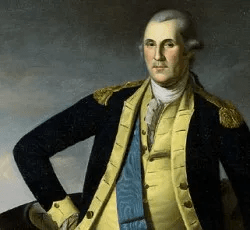
George Washington, from George Washington’s Mt. Vernon.

Having recently returned from Washington’s camp at Middlebrook, NJ, former President of the Continental Congress (November 1, 1777, to December 9, 1778), Henry sat at his desk in Philadelphia “to indulge a Pen … to express the feelings of my heart.” He wrote, “I count it one of the highest honors of my Life to have been for some Weeks an Inmate in my own House with General Washington & his Lady.”1

The letter’s focus, however, was military and political in nature. Henry responded to Washington’s letter of February 17, which discussed the possibility of the British preparing a movement toward New Jersey, which Henry called the “Knight’s repeated schemes for effecting surprize & carnage.” The attack occurred on February 25 when Lt. Col. Thomas Sterling led a surprise assault on Brig. Gen. William Maxwell’s barracks at Elizabethtown.

Henry sent along two issues of the South Carolina Gazette containing “intelligence I have recd. from the Southward since the 15th. of January. Henry also shared the news that the Rebels had captured the schooner Count d’Estaing. The schooner was captured just hours after departing from the “Capes of Delaware” and was laden with military stores.

What neither man could know was that American forces would suffer a significant defeat the next day in the Georgia backcountry. The Battle of Briar Creek helped solidify Britain’s reconquest of Georgia, which had been in earnest the previous December. 2

  1. Henry Laurens to George Washington, Philadelphia, March 2, 1779, Papers of Henry Laurens, 15:62-64. ↩︎
  2. Joshua Howard, “‘Things Here Wear a Melancholy Appearance’: The American Defeat at Briat Creek,” Georgia Historical Society 88 no. 4 (Winter 2004), 477-498. ↩︎

Today in Henry Laurens, March 1, 1775

John Laurens by Charles Willson Peale, 1780. National Portrait Gallery, Smithsonian Institution.
John Laurens by Charles Willson Peale. National Portrait Gallery, Smithsonian Institution

Writing from the Carolina Coffee House, in London, John informed his father of the “shocking Intelligence…. I fear that all the lurking Traitors in every Province will not collect themselves, and exert their utmost Powers, to disunite us.”1 John had read that morning’s Gazetteer and New Daily Advertiser (London) that revealed that the New York Assembly voted to continue their trade with Great Britain.

John referred to those “base Dastards [who] bow a willing Neck to Slavery; and set a proper Mark upon them,” adding, “Oh how I shall glory to be an American.”2 The firebrand warned that failure to rise to this challenge and “act like Men deservg that Freedom … our Name will be recorded with Infamy.”

Perhaps foreshadowing Thomas Paine, John argued that it was time “Now [for] brave Patriots [to] stand forth and shew yourselves,” but he feared the recent actions by the New York Assembly would lead “our Tyrants [to] now Exult.” These indeed were “the times that try men’s souls.”3

  1. John Laurens to Henry Laurens, London, March 1, 1775, Papers of Henry Laurens, 10:81-83. ↩︎
  2. Greg Massey, John Laurens and the American Revolution (Columbia, 2000). ↩︎
  3. Daniel Edwin Wheeler, ed., Life and Writings of Thomas Paine (New York, 1908), 1 and Eric Foner, Tom Paine and Revolutionary America (New York, 2005), 139. ↩︎