Henry Laurens spent Christmas morning 1763 in much the same way he spent every other day that monumental year, and in much the same way the western world does in the twenty-first century: conducting business.1 Highlighting the patience required in a transatlantic eighteenth-century world, Henry explained that since he last wrote to the firm in June, he received their letter from May. He had hoped to receive a reply to his June letter before writing back, but he was now running out of patience.
He got to the point, telling them he agreed to their price for their bale strouds, a woolen fabric especially prized by Native Americans. The product, however, arrived damaged, making it unsaleable except by vendue (public auction).
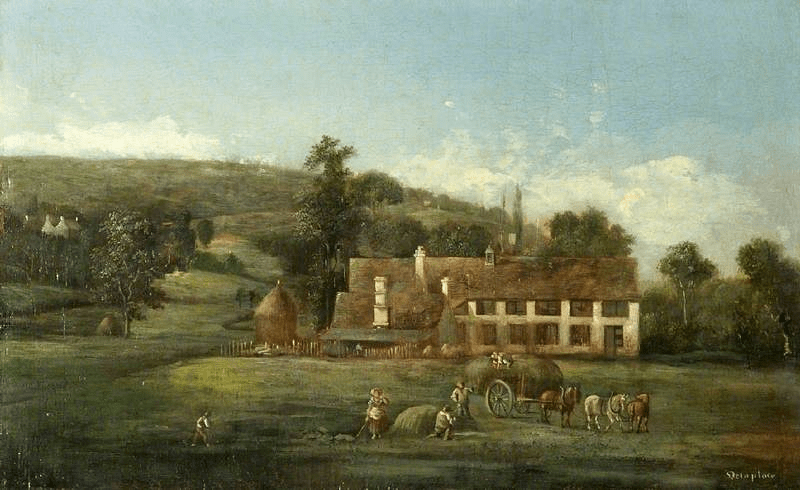
Hope Mill in Stroud, Gloucestershire, by Gerardin Delaplace (Stroud Woolen Mills)
Henry stated that such damage has been all too common of late and extended to “Negro cloth & duffils,” something the “packers must have been privy to.” Thus, there is a chink in the supply chain.
Maintaining the cordiality needed for eighteenth-century commerce, Henry closed: “I have no great offers to make … but, if ever you have occasion of my service [in South Carolina] you may be assured of my inclination to approve.”
Henry Laurens to Devonshire & Reeve, Charles Town, December 25, 1763, Papers of Henry Laurens, 4:107-108. ↩︎
Henry Laurens penned a letter to British merchant William Manning in late February 1776. This communique, however, was not merely a commercial endeavor. As was often the case with his business associates, Laurens cultivated a friendship with Manning. Henry’s son, John, would cultivate something much more than friendship with Manning’s daughter, Martha, later that year, forcing him to marry the young woman, out of “pity.”1
But this letter was neither about John Laurens nor Martha Manning. This was a troubling report from one British subject to another: one at the empire’s periphery; the other at the imperial core. Although independence remained five months into the contingent future, war had already begun. Lexington and Concord now seemed a distant memory. The arrest the previous month of Georgia Governor Sir James Wright, a friend of Laurens’s in less timorous times, was in the recent past. And as Laurens sat in the State House that early February morning, Loyalist and Rebel forces had just clashed at the Battle of Moore’s Creek Bridge, in modern Currie, North Carolina.2
The omnipresence of war filled Henry’s pen that dank morning. “Every day,” he wrote, “leads us … deeper and deeper into warlike preparations … matches & ball all in readiness even for a midnight defense.” He assured his friend, in typical Gamecock style, that South Carolinians preferred torching their own town to allowing a “cruel enemy” access. Hyperbole for sure, but he insisted that men were prepared to “oppose at all hazards the unjust attempts of the ministry … to involve us all in the horrible scenes of foreign and domestic butcheries.” And he did not mean war. The “foreign and domestic” foes resided amongst and near Carolinians.
Although Henry was concerned about the threat of British men-of-war assaulting Charles Town’s front, he was most worried about the possibility of Native Americans “on our backs [and] Tories and Negro Slaves to rise in our bowels,” all such events, he assured Manning, were playing out in Georgia.3 Unaware of the deep psychology at play, within his own psyche, Henry maintained that Carolinians “will save [Britain] the trouble to manumit & set free those Africans whom she captivated, made slaves, & sold to us.” In short, enslavers “ready … to do every thing in their power” to resist British tyranny.” Cognitive dissonance activated. Months later, Thomas Jefferson echoed this painfully ironic statement.
In their argumentation against supposed British tyranny, men like Henry and Jefferson sought to capitalize on the moral high ground. Of this cognitive dissonance, historian Peter A. Dorsey observed: “Slaves may have symbolized what England threatened to do to the colonies, but white Southerners also believed that enslaved Americans, acting on the same values Whigs professed, were at least as dangerous.”4
Henry Laurens to William Manning, Charles Town, February 27, 1776, in Papers of Henry Laurens, 11:122-128. For the nuptials, see John Laurens to Henry Laurens, London, October 26, 1776, in ibid., 11:275-278. For the pitiful nature of those nuptials, see John Laurens to James Laurens, London, October 25, 1776, Henry W. Kendall Collection, New Bedford Whaling Museum, Sharon, Massachusetts. ↩︎
For Lexington and Concord, see Walter Borneman, American Spring: Lexington, Concord, and the Road to Revolution (New York, 2015). For the capture of Governor Wright, see Greg Brooking, From Empire to Revolution: Sir James Wright and the Price of Loyalty in Georgia (Athens, 2024). For the battle, see Roger Smith, “The Failure of Great Britain’s ‘Southern Expedition’ of 1776: Revisiting Southern Campaigns in the Early Years of the American Revolution, 1775-1779,” The Florida Historical Quarterly 93, no. 3 (Winter 2015): 387-414. ↩︎
For the interplay of Natives, Blacks, and the British, see Jim Piecuch, Three Peoples, One King: Loyalists, Indians, and Slaves in the Revolutionary South, 1775-1782 (Columbia, 2013). ↩︎
Peter A. Dorsey, “To ‘Corroborate Our Own Claims’: Public Positioning and the Slavery Metaphor in Revolutionary America,” American Quarterly 55, no. 3 (September 2003), 378 and 356. ↩︎
This letter is a nice example of a typical Laurens-related letter of the period. It has three themes: war news, personal affairs, and business particulars.
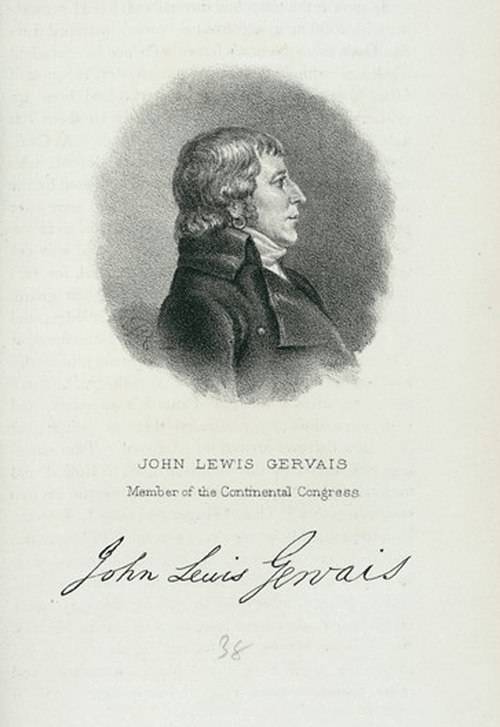
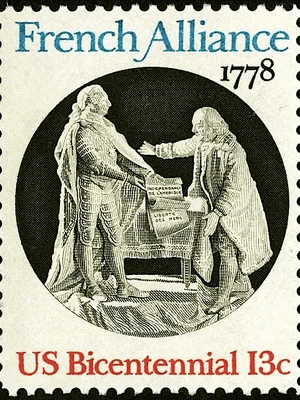
Henry’s good friend, John Lewis Gervais, writes from Charles Town on this Friday, informing Henry that he received Laurens’s important letter from May 3rd. In it, Gervais learns of “the happy turn of our affairs by the Alliance with France.”1 Gervais basks in the belief that the event “will afford us leisure to put ourselves upon a more respectable footing.” Charlestoanians greeted that news with “great Satisfaction to all (except Tories).” Gervais understood the geopolitical importance of the news. Great Britain must now be stretched too thin, defending the home island and the valuable West Indies from French invasions and excursions. Gervais say he joins the rest of Charleston in their asatisfaction that Henry has decided to “stay a little longer in Congress [still at York, Pennsylvania] … particularly at this present Juncture.”
The letter turns personal, as many such letters do, and Gervais says that he had recently taken his wife to “Goose Creek [a tributary of the Charles Town’s Cooper River] in hopes the change of air would restore [her] strength.” The change of air and scenery must have helped because “she Walcks much better.”
Goose Creek is a tributary of Charles Town’s Cooper River. Look due North of Christ Parish, the pink district at the far right of the map. Image: Charleston County Public Library.
The portion of this letter written this day concludes with some personal business. Gervais, who oversaw Laurens’s plantation business during his stay in Congress. “I have sent Mr. [George] Galphin [an Indian trader and commissioner] an order on Mr [Leroy] Hammond [another Indian commissioner] at Sight for fourteen hundred & Sixty Dollars the Sum which you desired me to pay him.”2
John Lewis Gervais to Henry Laurens, Charles Town, June 19, 1778, Papers of Henry Laurens, 13:491-495. The June 19th portion of this letter ends on p. 493. ↩︎
Waiting for “fair Wind” aboard the Fortrose on the Kentish coast, Henry sits down to write a heartfelt letter to his stepmother, Elizabeth Wicking Laurens.1 Upon exchanging vows in July 1742, Elizabeth, a former bookseller on Broad Street, became Jean Laurens’s second wife and Henry’s stepmother. Their marriage would be shortlived as Jean died five years later at the age of fifty-one.
Elizabeth had just “taken a Passage” from Charles Town for Bristol, for which Henry “pray[ed] the merciful Governour of all things to conduct you in safety … & to bless the Evening of your days with Health & all felicity.”
“I assure you,” Henry wrote, “it shall always be my study in that & all others to give you perfect satisfaction” because “I can never discharge the many obligations I am under to you.” Sadly, the extant correspondence does not reveal the source of these obligations.
Henry begs of Elizabeth to immediately apprise him of her arrival, and “as often after as your Leisure will permit.” He closes with the assurance that “’tis needless to offer you my service if you should have any commands in Carolina.”
Henry Laurens to Elizabeth Laurens, Deal, April 20, 1749, Papers of Henry Laurens, 1:239-240. ↩︎
From his desk on Tuesday, April 13, 1756, Henry pens his first extant letter to Richard Oswald, who would come to play a principal role in Laurens’s accumulation of wealth. A quarter century later he would save Laurens from the Tower of London.1
Henry’s is a response to Oswald’s of two months prior. He acknowledges appreciation for “our worthy Friends,” Augustus and John Boyd, “for the confidence they repose in us by becoming our Security for a punctual Remittance of the Produce of your Slaves intended us by the Carlisle,” captained by Thomas Oswald.2 The Boyd brothers were West Indian merchants in London. Henry likely met them during his time in the capital in the late 1740s. Here again we can see Henry making ample use of his growing transatlantic connections.
The provincial government’s inability to protect the backcountry following General Edward Braddock’s defeat along the Monongahela threw the Lowcountry into spasms, leaving Henry to suggest other options for Oswald’s human cargo. The current “Scene,” Henry wrote, “is so much alter’d for the worse within these” last several months that “we sincerely wish you may order the Sloop to a much better than our at present.”
Recent events were especially loathsome, Henry writes, because South Carolinians insatiably spent £330 “for some very prime Gambia men” just last fall. However, one would be lucky to unload similar men at two-thirds of that price.
Henry Laurens to Richard Oswald & Co., Charles Town, April 13, 1756, Papers of Henry Laurens, 2:169-170. ↩︎
Henry’s firm, Austin & Laurens, sold Gambian slaves brought across the Atlantic via Thomas Oswald’s Carlisle later that summer. South Carolina Gazette, July 1, 1756. ↩︎
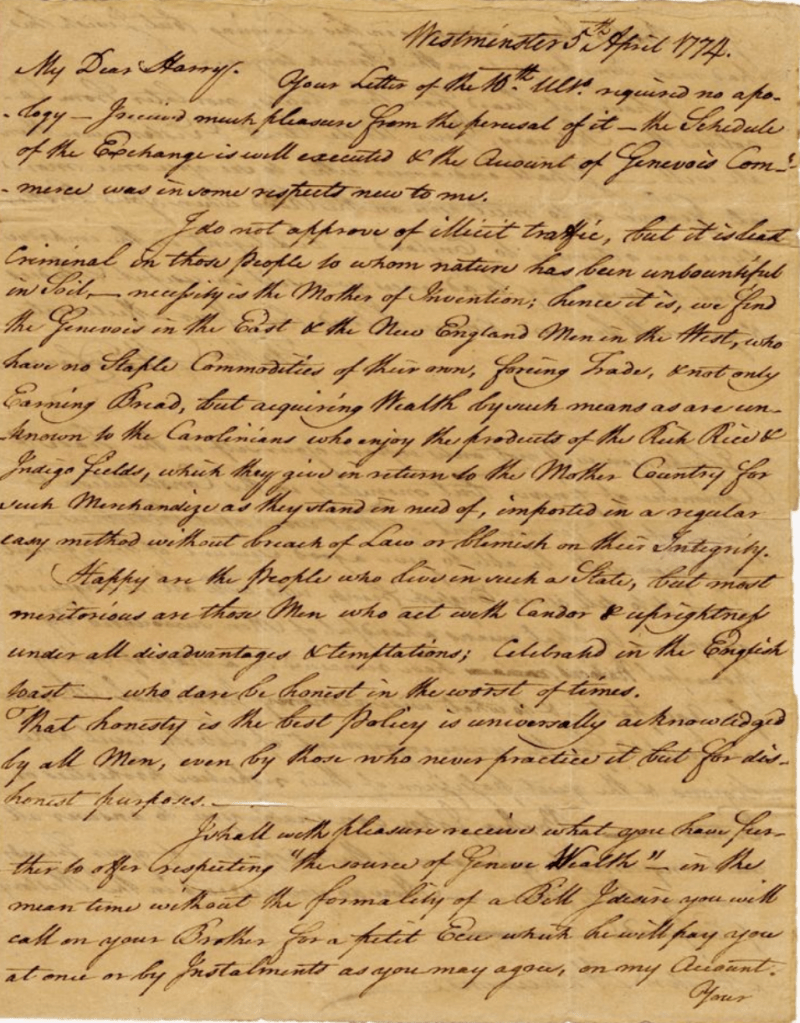
This letter responds to Harry’s letter of March 10, which, unfortunately, has not survived or resurfaced. Discussing the important news of the era, Henry informs his 11-year-old son, “I do not approve of illicit traffic.” However, Henry suggests, “It is least Criminal in those People to whom nature has been unbountiful in Soil [because n]ecessity is the Mother of Invention.” Thus, people “who have no Staple Commodities … forcing Trade, & not only Earning Bread, but acquiring Wealth by such means as are unknown to the Carolinians,” who abound in “Rich Rice & Indigo fields.”
Henry acknowledges the fortune of Carolinians, “but most meritorious are those Men who act with Candor & uprightness under all disadvantages & temptations; Celebrated in the English toast, who dare to be honest in the worst of times.”2
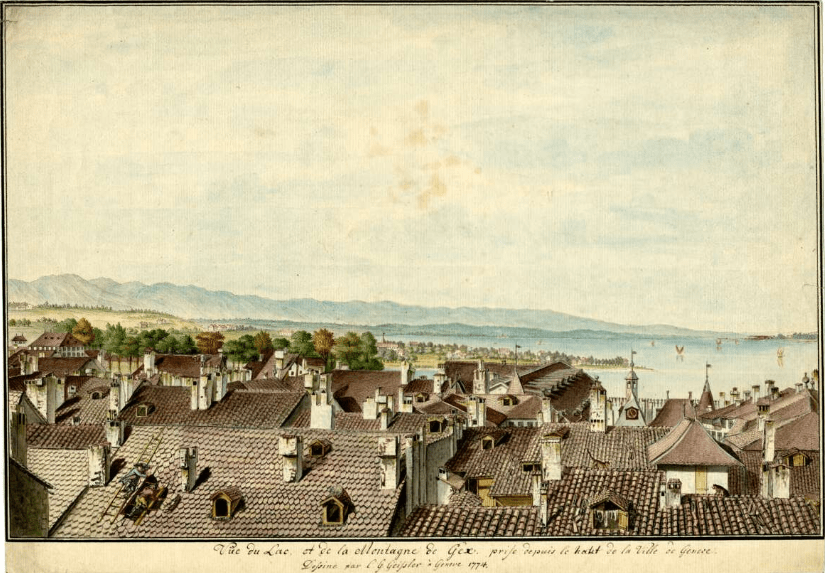
Henry closes his letter with the admonition, “To be diligent in the improvement of every Day to advance yourself in useful Studies & you will be more & more beloved by Your Affectionate Father.” He adds in a postscript his desire that in addition to his studies in commerce, he should inform himself “minutely in the Constitution & form of the Government of that wonderful Republic [Geneva].”
Henry Laurens to Henry Laurens, Jr., April 5, 1774, Papers of Henry Laurens, 9:377-379. ↩︎
This toast can be found in George Cavalier (pseudonym), A Letter to the Late Author of the Spectator; Occasion’d by His Paper of Monday December 6, 1714 (Lonon, 1714). ↩︎
In his letter to Thomas Courtin (sometimes Curtin), Henry requests a new ship be built to transport next year’s harvest.1
Henry requests Courtin, a shipbuilder and captain, “will set about the work of building a Ship without delay” and keep “me advis’d of your proceedings” to allow me to obtain “outward freight for her.”2
Emphasizing the importance of transatlantic connections, Henry plans to place funds “in the hands of my friends … in London, as well as” two messengers in Bristol “to keep you supply’d with Money as it shall be wanted.” But, Henry advises, “you will be as frugal as may be.”
If the money shipped on the Judith runs “against accidents,” Courtin should “apply immediately to Mrs. Nichelson & Co” for £200 Sterling.
Additionally, Henry advises that he has “Enter’d the Silver [already sent] you to the Debit of the Ship,” which shall be named Flora.
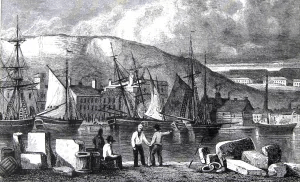
According to Dover historian Lorraine Sencicle, the vessel was built in Dover shipyard.3 It was completed and transported the Flora to Charles Town late in 1764.4
Henry Laurens to Thomas Courtin, Charles Town, March 30, 1763, Papers of Henry Laurens, 3:390-391. All quotations from this letter. ↩︎
Regarding Courtin as a ship captain see, The Remembrancer, Or Impartial Repository of Public Events (London, 1782), no page number. ↩︎
Lorraine Sencicle, “Shipbuilding Part II of the Golden Age 1700-1793, http://www.doverhistorian.com (accessed March 30, 2025). ↩︎
Henry Laurens to Maynes & Co., Charles Town, December 10, 1764, Henry Laurens Papers, South Carolina Historical Society, Charleston. ↩︎
Henry’s letter to his brother-in-law, Francis Bremar, is enlightening for various reasons.1 First, it is an example of Henry’s method of business communication. He mentions the previous correspondence about which this letter revolves and identifies the vessels and captains that transported those letters. Such detailed information would be critical to maintaining the proper flow of transatlantic commerce.
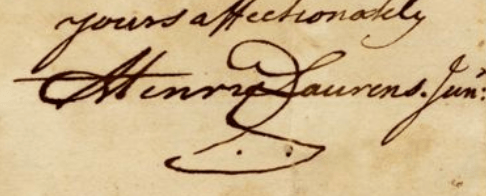
Henry Laurens’s signature (1778).
Henry presumes that Bremar, who married Henry’s sister Martha in 1739, had already left London for Charles Town and that Henry would soon follow.
Francis solicited Henry’s commercial assistance in November. “You desire me to mention you to some of my [friends] who do business for Carolina,” Henry writes, but “You have left me to guess who is to be your chief friend & correspondent here [in London]. Moreover, Francis had failed to illustrate his ability to bring to Charles Town a “tolerable Sum toward purchasing a Cargo which [are] of great consequence.”
He indicates that London’s Carolina traders are “very cautious of opening new Accounts & many absolutely refuse to do it,” but that he flatters himself “with the Hopes of your making a better figure in respect to Cash than [many that] have been gone before you.”
Henry pedantically expresses his faith that Francis “will be as carefull as any to fulfill your engagements.”
After advising Francis of a few vital aspects of commerce—a strong financial backing, the importance of business contacts, and steadfast honesty—Henry states that he will “take proper opportunities to recommend you to such Gentlenen as I think I have any influence with & will be worth your acquaintance.”
Reinforcing additional elements of a successful trader, Henry writes, “I can only assure them that I know you to be an Honest Man, Industrious, & frugall [who is also well] acquainted with the proper articles for importation & sale at Carolina & one who I am perswaded will punctually comply with his engagements.”
Finally, Henry acknowledges his desire to assist further and “offer to be bound for you, but ere this time you know of my engagement in Copartnership with Mr. G[eorge] Austin” which forbids assistance in that manner.
Henry then lists 22 qualified men of trade with whom he’ll reach out on Bremar’s behalf.
An early (1750) Austin & Laurens ad in the South Carolina Gazette.
Henry Laurens to Francis Bremar, London, March 27, 1748, Papers of Henry Laurens, 1:230-232. ↩︎
On this Saturday in early Spring, Henry joined his brother James and dozens of other merchants in expressing their gratitude to departing Governor William Henry Lyttleton.1
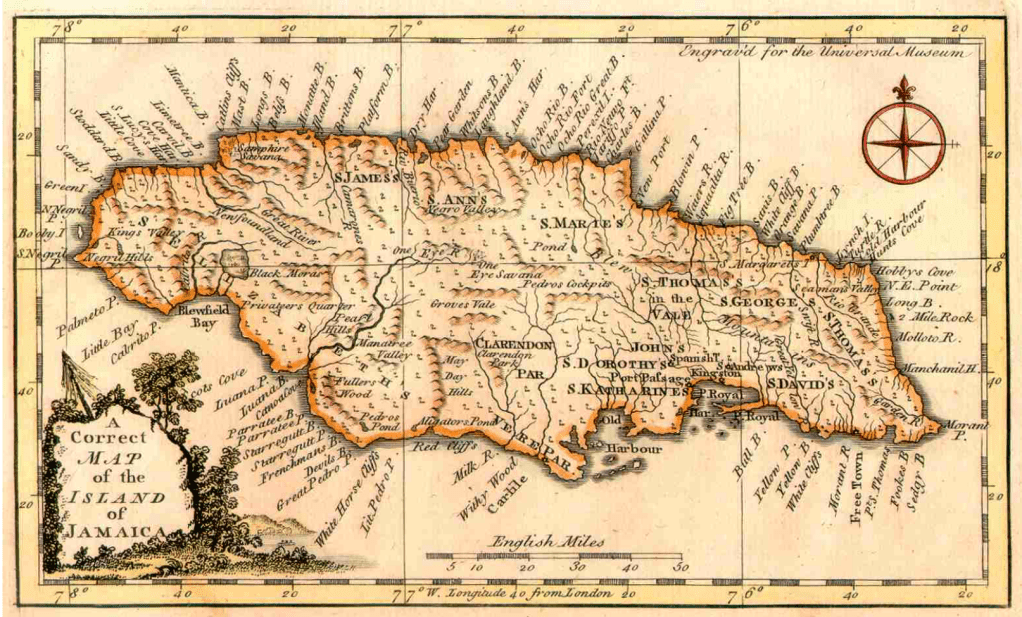
Born nine months after Henry, Lyttleton arrived in Charles Town in the early summer of 1756 amid great fanfare.2 Now, after nearly four years of leadership during a time of global warfare, Lyttleton left Charles Town for, ultimately, Jamaica, where he would become the 26th English governor of the sugarcane-rich island, but not before Henry and his fellow merchants expressed their “sincere and unaffected tenders of esteem.”
“When we first had the pleasure of [your leadership], it was with confidence in Your Merit,” adding that “We had good reason to hope that Trade & Commerce would Flourish under Your Excellency’s protection, which we now from a happy experience declare that Our hopes were not in vain.”
The merchants’ “humble address” applauded Lyttelton’s fine management of and concern for their pecuniary interests and those of the “public in general.” Neither Henry nor the merchants could conceive of a situation in which their interests were not also those of the “general public.”
South Carolina Gazette, March 22, 1760. All quotes come from this letter. The Vernal Equinox began on March 20, 1760. For more on Lyttelton, see Clarence John Attig, “William Henry Lyttleton: A Study in Colonial Administration” (PhD diss. University of Nebraska, 1958). ↩︎
Cartographer John Gibson created this map shortly after Tacky’s Revolt and likely shortly before Lyttelton’s arrival. See, Vincent Brown, Tacky’s Revolt: The Story of an Atlantic Slave War (Cambridge, 2021). ↩︎
Writing on this Saturday morning in mid-March, Henry prepares to finalize his father’s estate.1 Jean died on May 31, 1747, just three days before Henry arrived from England.2 This letter is Henry’s second to Prince William’s Parish planter, Hugh Bryan, a warm friend and ardent supporter of The Reverend George Whitefield. Interestingly, Bryan had been taken by the Native Americans when a child.3
Estate Inventory of Henry Laurens’s Father, Jean (Papers of Henry Laurens, 1:369)
“Your Note for One hundred & Eighty Pounds Payable to Laurens & Addison [the mercantile firm of Henry’s uncle, Peter, and Benjamin Addison]. is assign’d to me,” Laurens wrote in December 1747, “for the use of the Estate of [my father] Mr. John Laurens.” Furthermore, Henry asks that payment be remitted in three weeks.4
Nearly twelve weeks later, on that Saturday morning, Henry tactfully observed, “as I have receiv’d no Answer I imagine my Letter has not reach’d you which occasions my writing to you again on the same Business.” Henry expresses a sense of urgency as he desires to return to London “early in May next if I can [settle] my Fathers affairs.” Therefore, he declares, “I shall esteem it a favour if you will furnish me with the Amount of your said Note.”5
After nearly sixteen months of settling his father’s estate and making business arrangements, Henry sailed for London on September 21, 1748, aboard the Charming Nancy, captained by William White.6 The debt remained unsettled at the time of Henry’s departure.7
Henry Laurens to Hugh Bryan, Charles Town, March 19, 1748, Papers of Henry Laurens, 1:123. ↩︎
For Jean’s death see, South Carolina Gazette, June 8, 1747. For Henry’s arrival see, South Carolina Gazette, June 1, 1747. ↩︎
For the first letter see, Henry Laurens to Hugh Bryan, Charles Town, December 29, 1747, Papers of Henry Laurens, 1:98-99. For George Whitefield see, Jessica M. Parr, Inventing George Whitefield: Race, Revivalism, and the Making of a Religious Icon (Jackson, 2015). ↩︎
Henry Laurens to Hugh Bryan, Charles Town, December 29, 1747, Papers of Henry Laurens, 1:98-99. For his uncle’s firm see, Henry Laurens to George Jackson, Charles Town, September 7, 1747, Papers of Henry Laurens, 1:54. ↩︎
All quotes in this paragraph from Henry Laurens to Hugh Bryan, Charles Town, March 19, 1748, Papers of Henry Laurens, 1:123. ↩︎










 Greg Brooking, PhD
