Today in Henry Laurens, March 15, 1768

From Charles Town, Henry writes to Reynolds, Getley & Co., of Bristol. This letter is illustrative of four critical components of eighteenth-century trade.1 First, Henry sends his letter via three different ships, ensuring delivery. Second, Henry chooses specific, competent, knowledgeable, and trustworthy captains to deliver his message. Third, Henry discusses both rates of exchange and credit availability. Finally, Henry’s connections allowed him to offer the firm better credit terms than he otherwise would have been able to do.

Henry dispatched his letter aboard three ships. On the 9th, Captain John Wells departed Charles Town aboard the Barclay.2 Two days later, the Carolina Packet (Captain William White) and the Ruby (Captain James Henderson) sailed for Bristol in western England on the Bristol Chanel that opens into the Atlantic.3

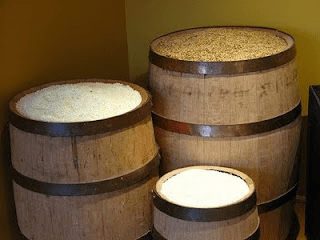
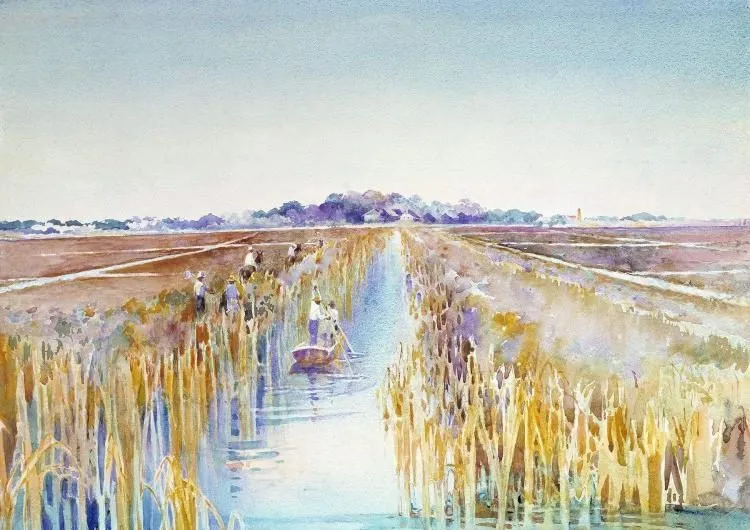
Henry praises the firm’s own Captain Joseph Brown, “who is equal in diligence & discretion to any Man that I have met with in his station & deserves much applause.” In this instance, Henry’s approbation is based on the efficiency with which Brown loads barrels of rice despite incessant rain, making it “unfit to move Rice in.” At the time of Henry’s letter, Brown had stowed on board over 1,000 barrels and “will be quite ready for Sea” in short order.

Henry closes his letter with a discussion of credit terms both in London and Charles Town. He mentions that he secured the firm a 6% discount and that he had “taken the Liberty to pass Bills upon you for Five Hundred & thirty Pounds Sterling all at 30 days sight & payable in London.”

The Mysterious Barrel of Gold (Undiscovered Charleston)
  1. Henry Laurens to Reynolds, Getly & Co., Charles Town, March 15, 1768. All quotes come from this letter unless otherwise noted. ↩︎
  2. South Carolina Gazette, March 14, 1768. ↩︎
  3. Ibid. ↩︎

Today in Henry Laurens, March 11, 1778

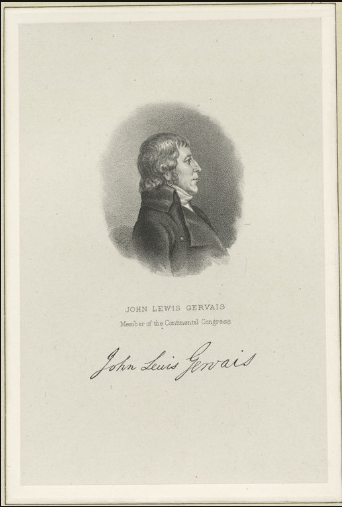
In the middle of his sixth month in York, Pennsylvania, Henry writes to his good friend and fellow Lowcountry planter, John Lewis Gervais.1 But likely still suffering from a “Severe attack of the Gout,” Henry missed home.2

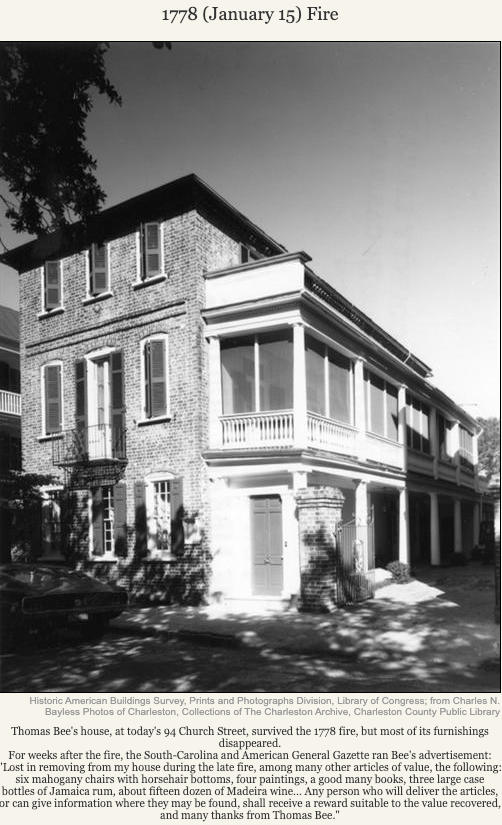
“Sympathize with me,” he bemoaned,” when I complain that near four Months have elapsed since the date of the last public or social Letter to me from Charles Town.” Thus, imagine “what I must feel” when I have read in the papers “of a wasting Fire in the Capital City of the state from when I ascended.”3 The fire, which started in a baker’s kitchen on Queen Street the previous January 15, enveloped about 250 dwelling houses in short order. Also engulfed in the flames was the South-Carolina and American General Gazette, causing the paper to miss its January 22, 1778 issue: “The Printer having been burnt out of his house in the first on the 15th instant.”4

The reports alerted Henry “enough to make me feel deeply for my fellow Citizens_ Let me intreat my worthy friend Mr. [Gabriel, the elder] Manigault & your Self to charge my Brother’s Estate & my own with ample Sums in contribution to the relief of the necessitous…. You will see what other people give & go rather beyond proportion in subscribing for me.” Henry also offered his house to those who may need lodging.

Thomas Bee’s house (Preservation Society of Charleston)

In another example of Henry’s generosity of both spirit and wallet, he explained to Gervais the pitiable situation of Louis-Casimir, baron de Holtzendorff. The Baron had been one of the earliest French volunteers to the Rebel cause. Congress commissioned him a lieutenant colonel in November 1777, but Holtzendorff had been unable to make his expenses and soon requested leave to resign and return to France.5 Henry lent him “400 Dollars to help him” return to France, “after I had learned that he had been reduced to make sale of his Silver Mounted Sword & the Epaulets from his Coat.”

  1. Henry Laurens to John Lewis Gervais, York, March 11, 1778, Papers of Henry Laurens, 12:539-542. All quotes, unless otherwise noted, are from this letter. Congress had been forced to evacuate Philadelphia the previous September and settled in York on September 30. ↩︎
  2. John Lewis Gervais to Henry Laurens, Charles Town, February 23, 1778, Papers of Henry Laurens, 12:476. ↩︎
  3. For the fire, see Michael E. Stevens, “The Vigilant Fire Company of Charleston,” The South Carolina Historical Magazine 87, no. 2 (April 1986): 131-132; Lee Kennett, trans. and ed., “Charleston in 1778: A French Intelligence Report,” The South Carolina Historical Magazine 66, no. 2 (April 1966): 109-111; George C. Rogers, Jr., Charleston in the Age of the Pinckneys (Columbia, 1980), 28; and Richard Walsh, Charleston’s Sons of Liberty: A Study of the Artisans, 1763-1789 (Columbia, 1959), 80-81 and 100. ↩︎
  4. South-Carolina and American General Gazette, January 29, 1777. ↩︎
  5. Mark M. Boatner III, Encyclopedia of the American Revolution (Mechanicsburg, 1994), 509. ↩︎

Today in Henry Laurens, March 8, 1778

“I, no longer, correspond, in a publick Character, with you,” John Rutledge wrote, “but, as I wish, that my Conduct may always stand fair, in the Opinion of Men of Integrity & Understanding, I hope you will excuse my taking the Liberty of giving you, a brief account of my Resignation_”1

Former South Carolina state governor John Rutledge had just delivered his resignation speech three days prior. After declining to approve a new state constitution (1778), Rutledge stepped down, arguing that his powers wrested upon the current constitution (1776).2

Supreme Court Justice, John Rutledge (Supreme Court Historical Society).

Engaging in the political philosophy so typical of the time and referencing “Locke, Bolingbroke, and other celebrated Names,” Rutledge was convinced “that a Legislature has no lawful Power, to establish a different [form of government], but that such Power is, only, in the People, on a Dissolution of Government, or Subversion of the Constitution.”

Rutledge was nearly apoplectic that anyone could believe he “could have consented to the Establishment of a different Legislature,” at least “no candid & judicious Person.” However, men did expect him to do just that. But he argued that before they could even “pass an Act contrary” to the existing consitution, “a virtual, or implied, Absolutism, an Absolution, by an Act tantamount to a Law, for repealing that which imposed” their original oath (to the 1776 constitution) must first be agreed upon.

Failing that, Rutledge resigned. The vote for his replacement was not smooth. Arthur Middleton defeated Christopher Gadsden by a vote of 76 to 40 but refused the office using the same logic as Rutledge.3 Gadsden lost a second vote, this time Rawlins Lowndes, who accepted the appointment.

  1. John Rutledge to Henry Laurens, Charles Town, March 8, 1778, Papers of Henry Laurens, 12:527-529. All subsequent quotes come from this letter. ↩︎
  2. South Carolina and American General Gazette, March 12, 1778. For a narrative of the events leading to Rutledge’s resignation, see Edward McCrady, The History of South Carolina in the Revolution, 1775-1780 (New York, 1901), 236-239. ↩︎
  3. For Gadsden, see Stanly E. Godbold, Jr., and Robert Woody, Christopher Gadsden and the American Revolution (Knoxville, 1983) and Daniel McDonough, Christopher Gadsden, and Henry Laurens: The Parallel Lives of Two American Patriots (Plainsboro, 2000). ↩︎

Today in Henry Laurens, March 6, 1724

Happy birthday, Henry!

Thanks, AI.

Henry was an influential statesman, wealthy and connected merchant, planter, and slave trader from South Carolina. He was born into a Huguenot family of modest but growing means.

He amassed a considerable fortune as a slave trader, planter, and merchant and was undoubtedly colonial South Carolina’s most successful merchant.

His mercantile business, service in various social and political leadership roles in Charles Town, and calm and reasoned demeanor made him a natural selection as leader of the revolutionary movement emanating from Charles Town.

He did not let them down, and they chose him as a delegate to the Second Continental Congress, which then elected him its president. During his time on the national stage, he was a constant and loyal supporter of George Washington and played a crucial role in the passage of the Articles of Confederation.

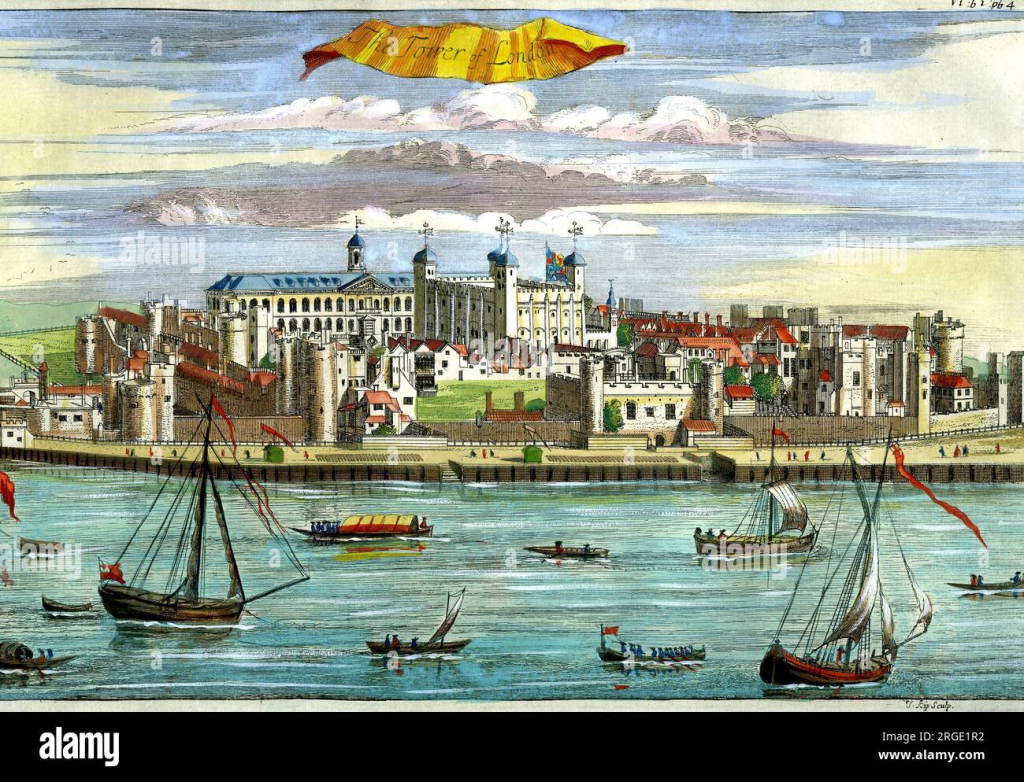
After resigning as president, Congress sent him on a diplomatic mission to the Netherlands on August 13, 1780. That voyage was cut short when the British captured his ship on September 3. He landed in the Tower of London on October 6 of that year and remained imprisoned until December 31, 1781, when he was exchanged for General Charles Cornwallis.

Tower of London, Alamy.

He mostly retired from public life following his return to South Carolina and died there in 1792.

Although he might be best known for being the father of John Laurens (of Hamilton fame), earlier generations of Americans have long-admired his prominent though understudied role in the American Revolution.His legacy includes his contributions to American independence and early American governance. It also includes his significant role in the growth of chattel slavery in the South Carolina lowcountry.

Today, in Henry Laurens, March 3, 1759

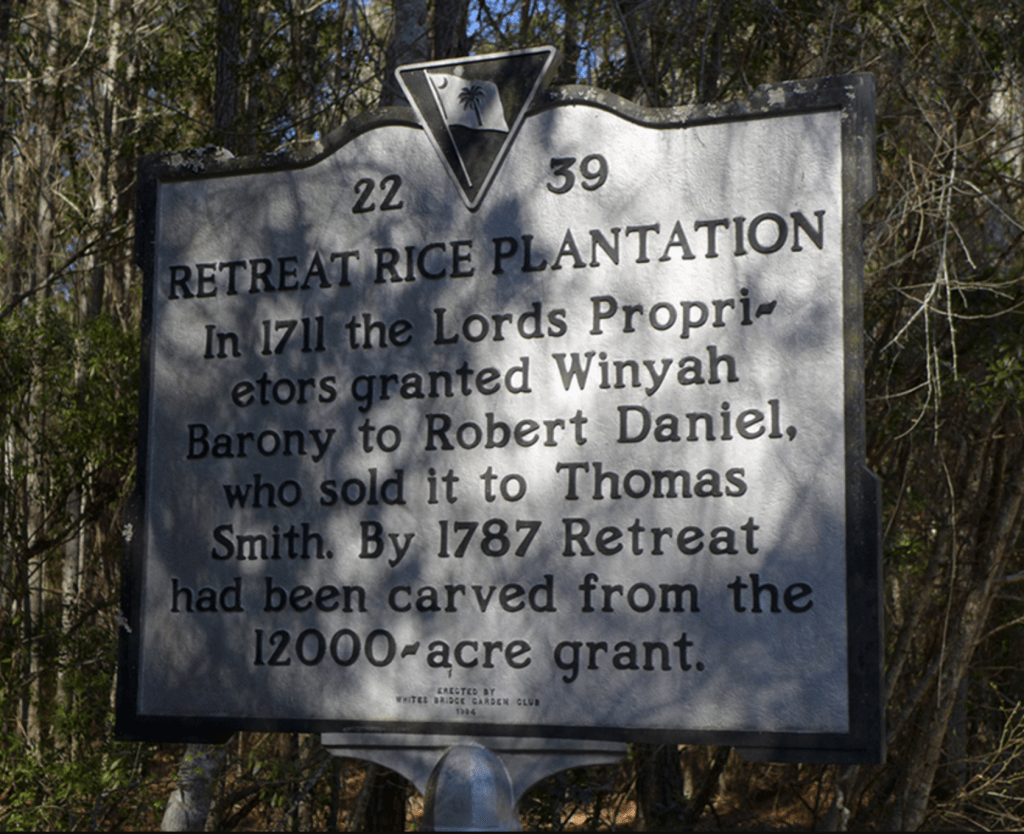
The Porto firm of Arthur Holdsworth and John Olive forward the details of the sale of Henry’s rice in Portugal.1 The proceeds from the sale were 1,334$775 [sic] “which carry to your credit.” They advise Henry they would have tried to hold out for better terms, but they had learned more rice would soon arrive.

It was the Rice Act of 1730 that allowed South Carolinians to export directly to Spain and Portugal.2

Retreat Plantation, Prince George, Winyah Parish, South Carolina (South Carolina Plantations).
  1. Holdsworth and Olive to Henry Laurens, Porto, March 3, 1759, Papers of Henry Laurens, 3:5. ↩︎
  2. Edward McCrady, The History of South Carolina under the Royal Government, 1719-1776 (New York, 1899), 109. ↩︎

Today in Henry Laurens, March 2, 1779

George Washington, from George Washington’s Mt. Vernon.

Having recently returned from Washington’s camp at Middlebrook, NJ, former President of the Continental Congress (November 1, 1777, to December 9, 1778), Henry sat at his desk in Philadelphia “to indulge a Pen … to express the feelings of my heart.” He wrote, “I count it one of the highest honors of my Life to have been for some Weeks an Inmate in my own House with General Washington & his Lady.”1

The letter’s focus, however, was military and political in nature. Henry responded to Washington’s letter of February 17, which discussed the possibility of the British preparing a movement toward New Jersey, which Henry called the “Knight’s repeated schemes for effecting surprize & carnage.” The attack occurred on February 25 when Lt. Col. Thomas Sterling led a surprise assault on Brig. Gen. William Maxwell’s barracks at Elizabethtown.

Henry sent along two issues of the South Carolina Gazette containing “intelligence I have recd. from the Southward since the 15th. of January. Henry also shared the news that the Rebels had captured the schooner Count d’Estaing. The schooner was captured just hours after departing from the “Capes of Delaware” and was laden with military stores.

What neither man could know was that American forces would suffer a significant defeat the next day in the Georgia backcountry. The Battle of Briar Creek helped solidify Britain’s reconquest of Georgia, which had been in earnest the previous December. 2

  1. Henry Laurens to George Washington, Philadelphia, March 2, 1779, Papers of Henry Laurens, 15:62-64. ↩︎
  2. Joshua Howard, “‘Things Here Wear a Melancholy Appearance’: The American Defeat at Briat Creek,” Georgia Historical Society 88 no. 4 (Winter 2004), 477-498. ↩︎

Today in Henry Laurens, March 1, 1775

John Laurens by Charles Willson Peale, 1780. National Portrait Gallery, Smithsonian Institution.
John Laurens by Charles Willson Peale. National Portrait Gallery, Smithsonian Institution

Writing from the Carolina Coffee House, in London, John informed his father of the “shocking Intelligence…. I fear that all the lurking Traitors in every Province will not collect themselves, and exert their utmost Powers, to disunite us.”1 John had read that morning’s Gazetteer and New Daily Advertiser (London) that revealed that the New York Assembly voted to continue their trade with Great Britain.

John referred to those “base Dastards [who] bow a willing Neck to Slavery; and set a proper Mark upon them,” adding, “Oh how I shall glory to be an American.”2 The firebrand warned that failure to rise to this challenge and “act like Men deservg that Freedom … our Name will be recorded with Infamy.”

Perhaps foreshadowing Thomas Paine, John argued that it was time “Now [for] brave Patriots [to] stand forth and shew yourselves,” but he feared the recent actions by the New York Assembly would lead “our Tyrants [to] now Exult.” These indeed were “the times that try men’s souls.”3

  1. John Laurens to Henry Laurens, London, March 1, 1775, Papers of Henry Laurens, 10:81-83. ↩︎
  2. Greg Massey, John Laurens and the American Revolution (Columbia, 2000). ↩︎
  3. Daniel Edwin Wheeler, ed., Life and Writings of Thomas Paine (New York, 1908), 1 and Eric Foner, Tom Paine and Revolutionary America (New York, 2005), 139. ↩︎

Today in Henry Laurens, February 28, 1766

Henry penned a letter from Charles Town to his wife’s nephew, Elias Ball, Jr. (often called Elias Ball of Wambaw or Wambaw Elias).1 Ball family biographer, Anne Simons Deas, reported in the early twentieth-century that he was a “man over-bearing, selfish, arrogant, lavish of sneers and criticism, and not over-considerate of other people’s feelings. Modern Ball family biographer, Edward Ball, related a story his father told about Wambaw Elias. “He had about a hundred and fifty slaves,” his dad related, “and he was a mean fella.” The crux of the story is that Wambaw Elias had been a Tory, remaining loyal to Britain. Charles, Lord Cornwallis had given him the rank of colonel and a company of men. He had “fought the patriots and burned their houses until such time as the British lost and his victims called for revenge.”2

Of course, that may have been the rub: Wambaw Elias chose the wrong side, and his character was judged after he crossed the Rubicon, but he also might have been both a Loyalist and a man of poor rectitude.

Wambaw Elias Ball, the Gibbes museum of art.

Henry had been co-owner of a plantation on Wambaw Creek with Elias’s father, John Coming Ball. The letter’s primary purpose was a discussion of the division of “Cattle, Horses, &ca., as we undivided of the joint property of your late Father & me.”

Henry’s irritation with Elias’s actions is palpable, and it is quite clear that he would have never entered into a business relationship with Wambaw Elias, who did not possess his father’s business acumen. Moreover, he likely failed to inherit his father’s amiability.3 Regardless, Henry remained cordial: “Please to present my Love to your partner, to your Mamma, & all the Children.”

  1. Henry Laurens to Elias Ball, Jr., Charles Town, February 28, 1766, Papers of Henry Laurens, 5:81-83. ↩︎
  2. Anne Simons Deas, Recollections of the Ball Family of South Carolina and The Comingtee Plantation (Charleston, 1909), 100-112, especially page 111 and Edward Ball, Slaves in the Family (New York, 1998), 8-9. For an example of Ball’s fighting, see Ian Sabteron, ed., The Cornwallis Papers: The Campaigns of 1780 and 1781 in The Southern Theatre of the American Revolutionary War (East Sussex, 2010), 26, 64, 66-67, 70, 92, 209, 220, 244, 266, and 359. ↩︎
  3. Anne Simons Deas, Recollections of the Ball Family of South Carolina and The Comingtee Plantation (Charleston, 1909), 91-95. ↩︎

Today in Henry Laurens, February 27, 1772

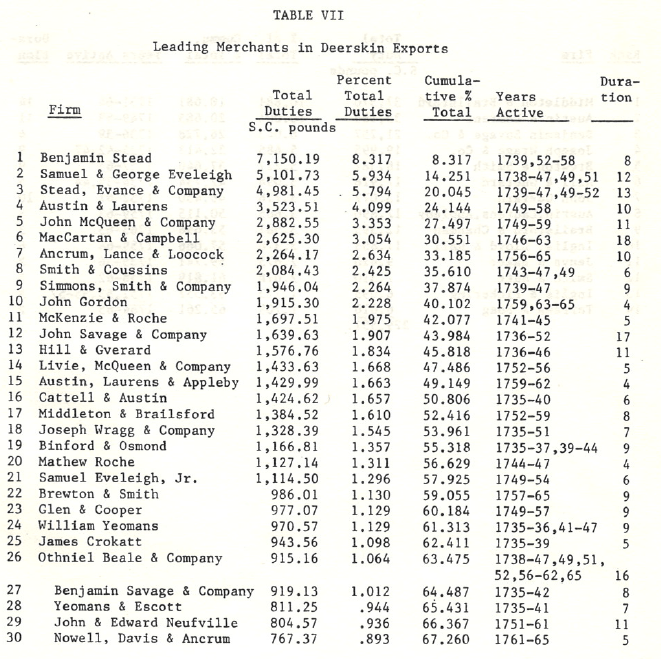
From Westminster, Henry responded to Bristol merchant William Cowles’s letter of the twenty-fifth.1 Henry repeated his wish that Cowles not financially inconvenience himself on Laurens’s behalf. Nor would I, my good friend,” Henry wrote, “desire you to accept any other Bills on my account unless quite agreeable & convenient to your own affairs. I would by no means put you to the smallest difficulty.” To prevent future “inconveniencies,” Henry “signified an inclination to sell off my parts of all the Deer Skins.” Additionally, he wrote John Tarleton, from Liverpool, owed him £5,000. He closed by wishing Cowles a “speedy recovery of health.”


Stuart O. Stumpf and Jennings B. Marshall, “Leading Merchants of Charleston’s First ‘Golden Age,’” in Essays in Economics and Business History (1986), volume 4.

John Tarleton was the merchant father of the infamous Green Dragoon, Banastre Tarleton. John would die the next year and bequeathed £5,000 to his nineteen-year-old son, which he mostly squandered.2 In several years, the son would wreak hell upon South Carolina, most notably at the Battle of Waxhaws.3

Again, we witness the very personal nature of the merchants’ craft, at least as practiced by Henry Laurens. Henry believed in only working with those with whom he cultivated a friendly personal, as well as professional, relationship.4

  1. Henry Laurens to William Cowles, Westminster, February 27, 1772, Papers of Henry Laurens, 8:191-192. ↩︎
  2. Robert D. Bass, The Green Dragoon: The Lives of Banastre Tarleton and Mary Robinson (New York, 1957), 14-16. ↩︎
  3. Lawrence E. Babits, A Devil of a Whipping: The Battle of Cowpens (Chapel Hill, 1998); John Buchanan, The Road to Guilford Courthouse: The American Revolution in the Carolinas (New York, 1997); John Pancake, This Destructive War: The British Campaign in the Carolinas (Tuscaloosa, 1985); Anthony J. Scotti, Brutal Virtue: The Myth and Reality of Banastre Tarleton (Berwyn Heights, 2002); and Banastre Tarleton, A History of the Campaigns of 1780 and 1781, in the Southern Provinces of North America (London, 1787). ↩︎
  4. David Hancock, Citizens of the World: London Merchants and the Integration of the British Atlantic Community, 1735-1785 (Cambridge, 2009), introduction. ↩︎

Today in Henry Laurens, February 26, 1776

Henry accepted William Henry Drayton’s offer to assist the “smaller Armed Vessels” in Charles Town harbor with the Prosper.1 Henry said the Council of Safety (the 2nd such council in South Carolina), of which he was the president) had judged it to be “very necessary for the public service immediately to equip these Vessels for Cruizing on the Coast [and] we desire you will order Thirty such Men on board the Brig[antine] Comet,” under the command of Captain Joseph Turpin, part owner of the schooner Molly.2

Unnamed, The Charleston Museum.

There was reason for concern these days. British vessels had been spotted off the coast of Charles Town and Savannah in January and February. Their presence off the coast of Savannah the previous month had compelled Georgia’s Council of Safety to arrest royal Governor Sir James Wright.3

James Wright, attributed to Alexander Soldi, undated, Telfair Museum.

British vessels remained off the Lowcountry coast for months, engaging Georgia’s Rebels in the Battle of the Riceboats (Rice Boats) in early March before attacking Charles Town (Fort Sullivan) at the end of June.4 Although the Georgians lost the Battle of the Riceboats, South Carolinians, led by Colonel William Moultrie, repelled the British offensive.5 The fort was renamed Fort Moultrie shortly after the battle.

  1. Henry Laurens to William Henry Drayton, Charles Town, February 26, 1776, Papers of Henry Laurens, 11:121-122. ↩︎
  2. Ibid. ↩︎
  3. Greg Brooking, From Empire to Revolution: Sir James Wright and the Price of Loyalty in Georgia (Athens, 2024), ch. 6. ↩︎
  4. Ibid., 152-154. ↩︎
  5. Jim Stokely, Fort Moultrie: Constant Defender (Washington, 1985); David Wilson, The Southern Strategy: Britain’s Conquest of South Carolina and Georgia, 1775-1780 (Columbia, 2005), ch. 4; John Buchanan, The Road to Guilford Courthouse: The American Revolution in the Carolinas (New York, 1997), ch. 1. ↩︎