Today in Henry Laurens, February 25, 1766

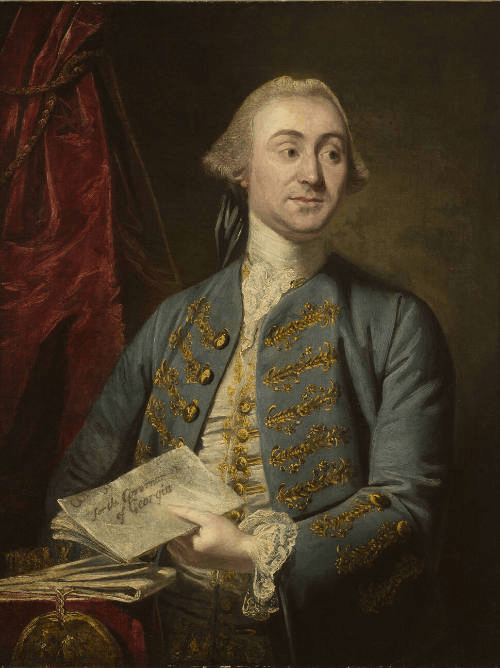
South Carolina’s colonial agent (lobbyist), Charles Garth, reported the House of Commons decision to repeal the Stamp Act (1765). However, it still had to clear an official vote in the Commons and the House of Lords. Garth expected the Commons to pass the bill easily but warned of heavy opposition in the House of Lords.1

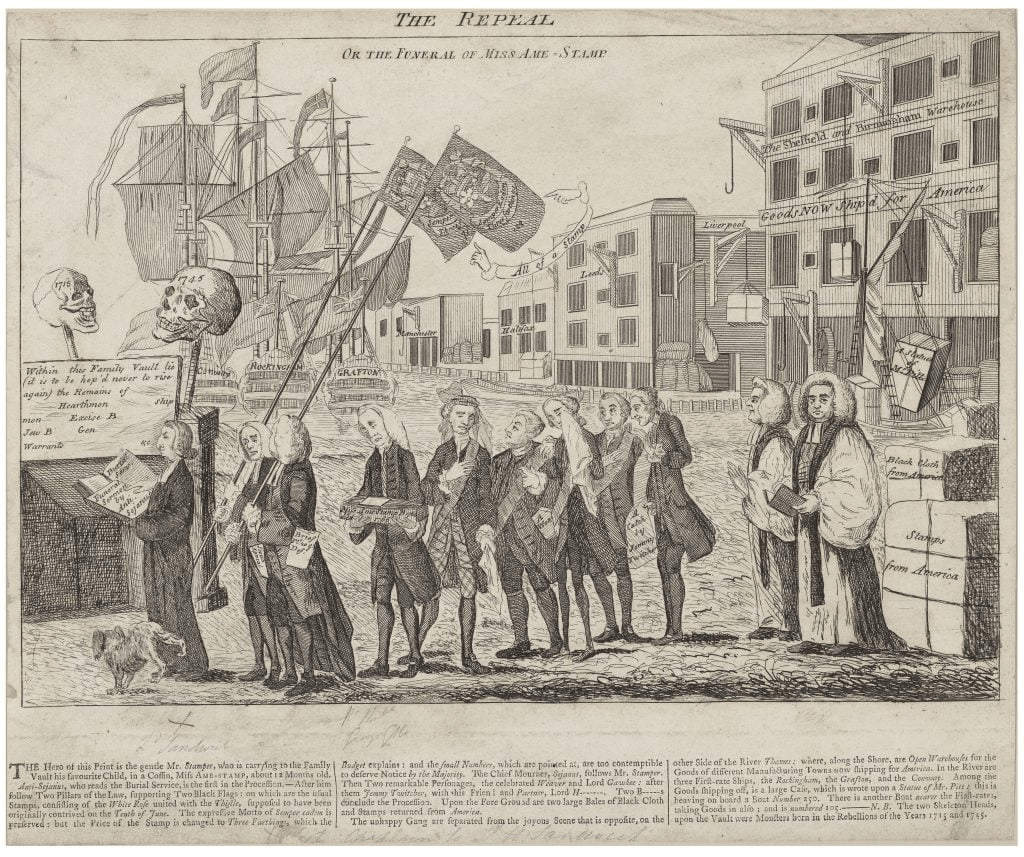
The Repeal, by Benjamin Wilson (The British Museum)

As historian Maurice Crouse noted, South Carolina’s opposition to the Stamp Act was cautious but effective. “Except for the several mob actions which were destructive of property,” South Carolinians had protested “without materially violating that or any other law.”2

From Savannah, however, Georgia’s Governor James Wright interpreted South Carolina’s response quite differently. He was all too familiar with Charles Town’s radicals and their decisions to hang three effigies from a gallows outside Dillon’s Tavern.3 “Too much of the rebellious spirit in the northern colonies has already shewn itself here,” Wright wrote to the ministry, and Georgians have been for “many months past stimulated by letters” sent from the other colonies, especially South Carolina, whose “seditious spirit” had infected the colony.4

Ultimately, though, a cross-class consciousness and acceptance of a stable social hierarchy emerged during the Stamp Act crisis. “Class interest,” Robert Weir noted, “extended merely to the protection of interests legitimately within the proper sphere of that class,” even if social mobility existed individually.5 Thus, South Carolinians believed in a hierarchical society that equally protected all property. Notably, the wealthy would serve as caretakers, governing for the common good.6

  1. Charles Garth to the Committee of Correspondence, London, February 25, 1766, Papers of Henry Laurens, 5:76. ↩︎
  2. Maurice A. Crouse, “Cautious Rebellion: South Carolina’s Opposition to the Stamp Act,” The South Carolina Historical Magazine 73, no. 2 (April 1972), 70-71. ↩︎
  3. Daniel J. McDonough, Christopher Gadsden and Henry Laurens: The Parallel Lives of Two American Patriots (Cranbury, 2000), 69. ↩︎
  4. Greg Brooking, From Empire to Revolution: Sir James Wright and the Price of Loyalty in Georgia (Athens, 2024), 66 and 73. ↩︎
  5. Robert M. Weir, “Liberty and Property, and No Stamps”: South Carolina and the Stamp Act Crisis” (Ph.D. diss., Western Reserve University, 1966), 15. ↩︎
  6. H. L. to James Marion, Mepkin, August 31, 1765, Papers of Henry Laurens, 4:671-672. ↩︎

Today in Henry Laurens, February 24, 1756 (Part II)

Posted on 

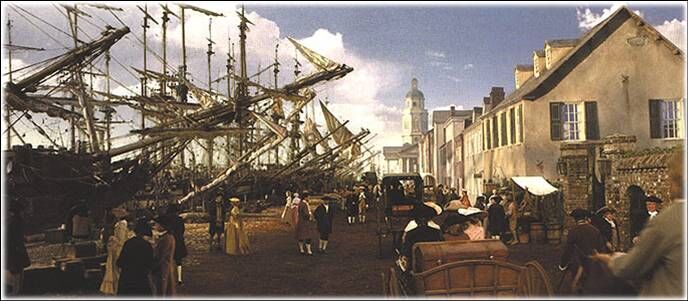
Still from the movie, The Patriot, showing Tradd Street (on the right) with some Hollywood CGI magic”

Today, Henry penned a letter to Mayne, Burn, & Mayne of Lisbon, Portugal, in response to their letter of November 22, 1755 (not found). However, Henry’s letter makes clear the subject of that letter.1

Henry expressed his joy that they “had escaped unhurt … in that shocking misfortune with which your City was attended the first of November.”

At 9:40 in the morning on the first of November, 1755, on the Feast of All Saints, a 7.7 earthquake (known as the Great Lisbon earthquake) rocked Lisbon. With its epicenter in the Atlantic Ocean, the quake caused a tsunami that engulfed Lisbon’s downtown area, causing significant flooding and a long-burning fire.

“It cannot be doubted,” Henry continued, “that your losses … must have been very great but then you are infinitely more happy than many others who must have lost their all & perhaps some of their Family or Friends.” Henry then imagined the devastation. “We are of the opinion,” he surmised, “this has been the most violent convulsion of the Earth that ever has happen’d…. The whole Atlantick Ocean we immagine must have been agitated as the Tide ebb’d and flow’d.”

In this moment, Henry must have contemplated the eight hurricanes that hit South Carolina in his lifetime, especially the Great Hurricane of 1752, from which the province had not yet recovered, physically or politically.

Fortunately, he noted, it was great news that “your Rice was preserv’d to help the distresses of the poor.

But, as was often the case with Henry, conversations always returned to commerce. “Crops of Rice this Year won’t exceed 70,000 Barrells,” he wrote, but “Last Year we ship’d 110,000 Barrels.” He then commented about the supply and demand of rice and wheat, before closing with a personal note.

“We wish you a return of many happy Years ’till the Memory of this fatal Catastrophe shall be totally effaced.” This is quintessential Henry Laurens. His business was personal. He carefully chose his business partners. They were honest men who could be relied upon and with whom he had cultivated caring personal relationships. Such connections, historian David Hancock has argued, were essential to integrating the 18th-century of the British-Atlantic.

  1. Henry Laurens to Mayne, Burn, & Mayne, Charles Town, February 24, 1756, Papers of Henry Laurens, 2:104-105. ↩︎

Today in Henry Laurens, February 24, 1724 (Part I)

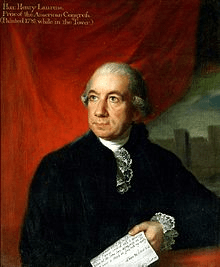
Henry Laurens was born on this day (O.S.). in Charles Town, South Carolina, to Jean Laurens and Esther Grasset.

Of Huguenot extraction, Jean Laurens was born in New York City before settling in the Lowcountry. He married Esther, also an American-born Huguenot, in New York City.

He was a saddler by trade but accumulated enough wealth to become a landowner and active member of his religious and social communities.