
Thoughts from a Biography in Progress: Henry Laurens on February 27, 1776

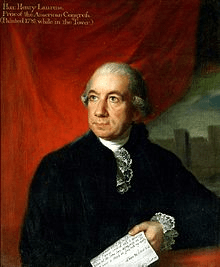
Henry Laurens penned a letter to British merchant William Manning in late February 1776. This communique, however, was not merely a commercial endeavor. As was often the case with his business associates, Laurens cultivated a friendship with Manning. Henry’s son, John, would cultivate something much more than friendship with Manning’s daughter, Martha, later that year, forcing him to marry the young woman, out of “pity.”1

But this letter was neither about John Laurens nor Martha Manning. This was a troubling report from one British subject to another: one at the empire’s periphery; the other at the imperial core. Although independence remained five months into the contingent future, war had already begun. Lexington and Concord now seemed a distant memory. The arrest the previous month of Georgia Governor Sir James Wright, a friend of Laurens’s in less timorous times, was in the recent past. And as Laurens sat in the State House that early February morning, Loyalist and Rebel forces had just clashed at the Battle of Moore’s Creek Bridge, in modern Currie, North Carolina.2

The omnipresence of war filled Henry’s pen that dank morning. “Every day,” he wrote, “leads us … deeper and deeper into warlike preparations … matches & ball all in readiness even for a midnight defense.” He assured his friend, in typical Gamecock style, that South Carolinians preferred torching their own town to allowing a “cruel enemy” access. Hyperbole for sure, but he insisted that men were prepared to “oppose at all hazards the unjust attempts of the ministry … to involve us all in the horrible scenes of foreign and domestic butcheries.” And he did not mean war. The “foreign and domestic” foes resided amongst and near Carolinians.

Although Henry was concerned about the threat of British men-of-war assaulting Charles Town’s front, he was most worried about the possibility of Native Americans “on our backs [and] Tories and Negro Slaves to rise in our bowels,” all such events, he assured Manning, were playing out in Georgia.3 Unaware of the deep psychology at play, within his own psyche, Henry maintained that Carolinians “will save [Britain] the trouble to manumit & set free those Africans whom she captivated, made slaves, & sold to us.” In short, enslavers “ready … to do every thing in their power” to resist British tyranny.” Cognitive dissonance activated. Months later, Thomas Jefferson echoed this painfully ironic statement.

In their argumentation against supposed British tyranny, men like Henry and Jefferson sought to capitalize on the moral high ground. Of this cognitive dissonance, historian Peter A. Dorsey observed: “Slaves may have symbolized what England threatened to do to the colonies, but white Southerners also believed that enslaved Americans, acting on the same values Whigs professed, were at least as dangerous.”4
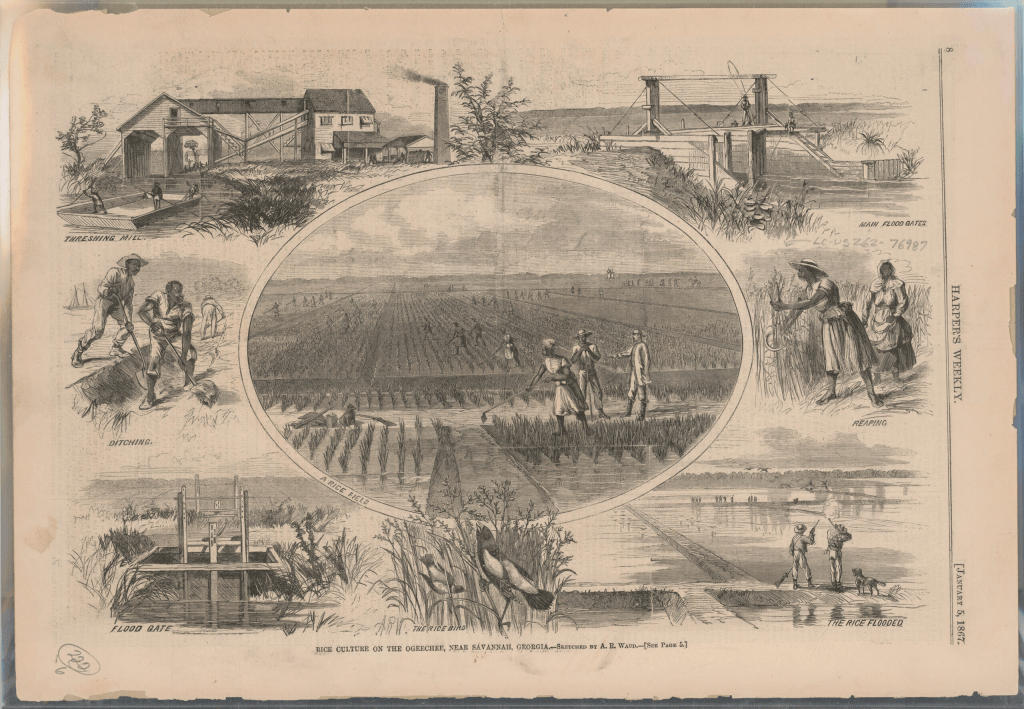
“Rice Story” via Palmetto Bluff.
  1. Henry Laurens to William Manning, Charles Town, February 27, 1776, in Papers of Henry Laurens, 11:122-128. For the nuptials, see John Laurens to Henry Laurens, London, October 26, 1776, in ibid., 11:275-278. For the pitiful nature of those nuptials, see John Laurens to James Laurens, London, October 25, 1776, Henry W. Kendall Collection, New Bedford Whaling Museum, Sharon, Massachusetts. ↩︎
  2. For Lexington and Concord, see Walter Borneman, American Spring: Lexington, Concord, and the Road to Revolution (New York, 2015). For the capture of Governor Wright, see Greg Brooking, From Empire to Revolution: Sir James Wright and the Price of Loyalty in Georgia (Athens, 2024). For the battle, see Roger Smith, “The Failure of Great Britain’s ‘Southern Expedition’ of 1776: Revisiting Southern Campaigns in the Early Years of the American Revolution, 1775-1779,” The Florida Historical Quarterly 93, no. 3 (Winter 2015): 387-414. ↩︎
  3. For the interplay of Natives, Blacks, and the British, see Jim Piecuch, Three Peoples, One King: Loyalists, Indians, and Slaves in the Revolutionary South, 1775-1782 (Columbia, 2013). ↩︎
  4. Peter A. Dorsey, “To ‘Corroborate Our Own Claims’: Public Positioning and the Slavery Metaphor in Revolutionary America,” American Quarterly 55, no. 3 (September 2003), 378 and 356. ↩︎
Today in Henry Laurens, June 19, 1778

This letter is a nice example of a typical Laurens-related letter of the period. It has three themes: war news, personal affairs, and business particulars.

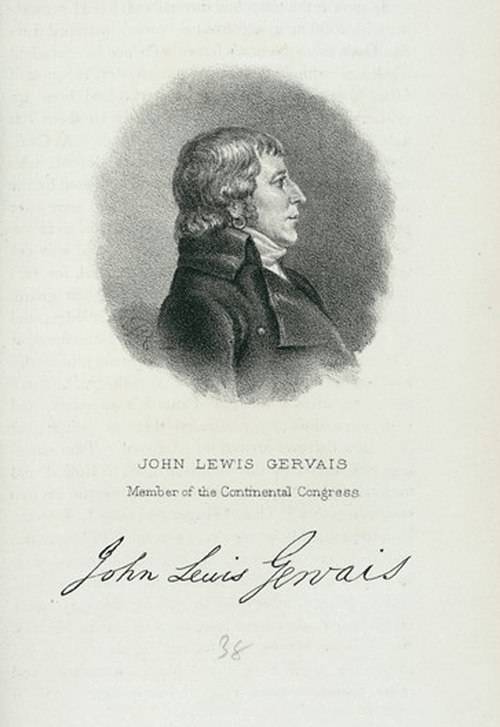
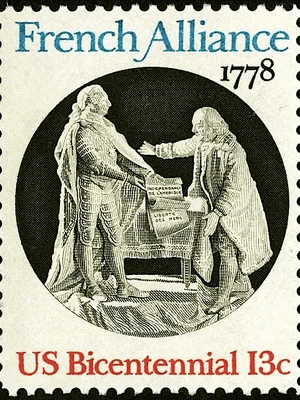
Henry’s good friend, John Lewis Gervais, writes from Charles Town on this Friday, informing Henry that he received Laurens’s important letter from May 3rd. In it, Gervais learns of “the happy turn of our affairs by the Alliance with France.”1 Gervais basks in the belief that the event “will afford us leisure to put ourselves upon a more respectable footing.” Charlestoanians greeted that news with “great Satisfaction to all (except Tories).” Gervais understood the geopolitical importance of the news. Great Britain must now be stretched too thin, defending the home island and the valuable West Indies from French invasions and excursions. Gervais say he joins the rest of Charleston in their asatisfaction that Henry has decided to “stay a little longer in Congress [still at York, Pennsylvania] … particularly at this present Juncture.”

York Daily Record, May 4, 2016

The letter turns personal, as many such letters do, and Gervais says that he had recently taken his wife to “Goose Creek [a tributary of the Charles Town’s Cooper River] in hopes the change of air would restore [her] strength.” The change of air and scenery must have helped because “she Walcks much better.”

Goose Creek is a tributary of Charles Town’s Cooper River. Look due North of Christ Parish, the pink district at the far right of the map. Image: Charleston County Public Library.

The portion of this letter written this day concludes with some personal business. Gervais, who oversaw Laurens’s plantation business during his stay in Congress. “I have sent Mr. [George] Galphin [an Indian trader and commissioner] an order on Mr [Leroy] Hammond [another Indian commissioner] at Sight for fourteen hundred & Sixty Dollars the Sum which you desired me to pay him.”2

  1. John Lewis Gervais to Henry Laurens, Charles Town, June 19, 1778, Papers of Henry Laurens, 13:491-495. The June 19th portion of this letter ends on p. 493. ↩︎
  2. For Gervais and plantation management see, John Lewis Gervais, Charles Town, November 27, 1777, Papers of Henry Laurens, 12:84-88. For George Galphin during this period, see Bryan Rindfleisch, “George Galphin and the War in the South, 1775-1780,” Journal of the American Revolution, September 1, 2015, https://allthingsliberty.com/2015/09/george-galphin-and-the-war-in-the-south-1775-1780/ (accessed June 19, 2025) and Michael P. Morris, “George Galphin,” New Georgia Encyclopedia, https://www.georgiaencyclopedia.org/articles/history-archaeology/george-galphin-ca-1700-1780/ (accessed June 19, 2025). ↩︎

Today in Henry Laurens, February 24, 1756 (Part II)

Posted on 

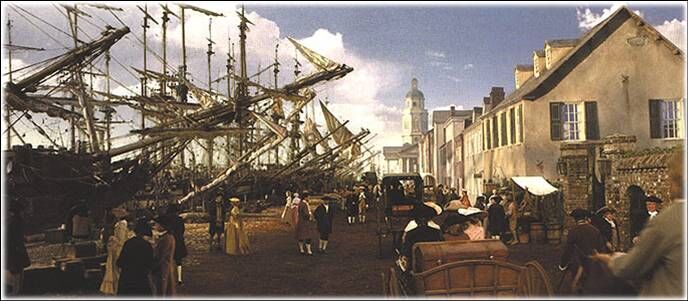
Still from the movie, The Patriot, showing Tradd Street (on the right) with some Hollywood CGI magic”

Today, Henry penned a letter to Mayne, Burn, & Mayne of Lisbon, Portugal, in response to their letter of November 22, 1755 (not found). However, Henry’s letter makes clear the subject of that letter.1

Henry expressed his joy that they “had escaped unhurt … in that shocking misfortune with which your City was attended the first of November.”

At 9:40 in the morning on the first of November, 1755, on the Feast of All Saints, a 7.7 earthquake (known as the Great Lisbon earthquake) rocked Lisbon. With its epicenter in the Atlantic Ocean, the quake caused a tsunami that engulfed Lisbon’s downtown area, causing significant flooding and a long-burning fire.

“It cannot be doubted,” Henry continued, “that your losses … must have been very great but then you are infinitely more happy than many others who must have lost their all & perhaps some of their Family or Friends.” Henry then imagined the devastation. “We are of the opinion,” he surmised, “this has been the most violent convulsion of the Earth that ever has happen’d…. The whole Atlantick Ocean we immagine must have been agitated as the Tide ebb’d and flow’d.”

In this moment, Henry must have contemplated the eight hurricanes that hit South Carolina in his lifetime, especially the Great Hurricane of 1752, from which the province had not yet recovered, physically or politically.

Fortunately, he noted, it was great news that “your Rice was preserv’d to help the distresses of the poor.

But, as was often the case with Henry, conversations always returned to commerce. “Crops of Rice this Year won’t exceed 70,000 Barrells,” he wrote, but “Last Year we ship’d 110,000 Barrels.” He then commented about the supply and demand of rice and wheat, before closing with a personal note.

“We wish you a return of many happy Years ’till the Memory of this fatal Catastrophe shall be totally effaced.” This is quintessential Henry Laurens. His business was personal. He carefully chose his business partners. They were honest men who could be relied upon and with whom he had cultivated caring personal relationships. Such connections, historian David Hancock has argued, were essential to integrating the 18th-century of the British-Atlantic.

  1. Henry Laurens to Mayne, Burn, & Mayne, Charles Town, February 24, 1756, Papers of Henry Laurens, 2:104-105. ↩︎

Today in Henry Laurens, February 24, 1724 (Part I)

Henry Laurens was born on this day (O.S.). in Charles Town, South Carolina, to Jean Laurens and Esther Grasset.

Of Huguenot extraction, Jean Laurens was born in New York City before settling in the Lowcountry. He married Esther, also an American-born Huguenot, in New York City.

He was a saddler by trade but accumulated enough wealth to become a landowner and active member of his religious and social communities.