Today in Henry Laurens, March 16, 1771

On this Saturday from Charles Town, Henry penned a letter to Richard Clarke, a well-respected priest sent to the city by the Society for the Propagation of the Gospel.1 He arrived in Charles Town in the fall of 1753. “When he preached,” wrote David Ramsay, “the church was crowded, and the effects of it were visible in the reformed lives of many of his hearers.”2
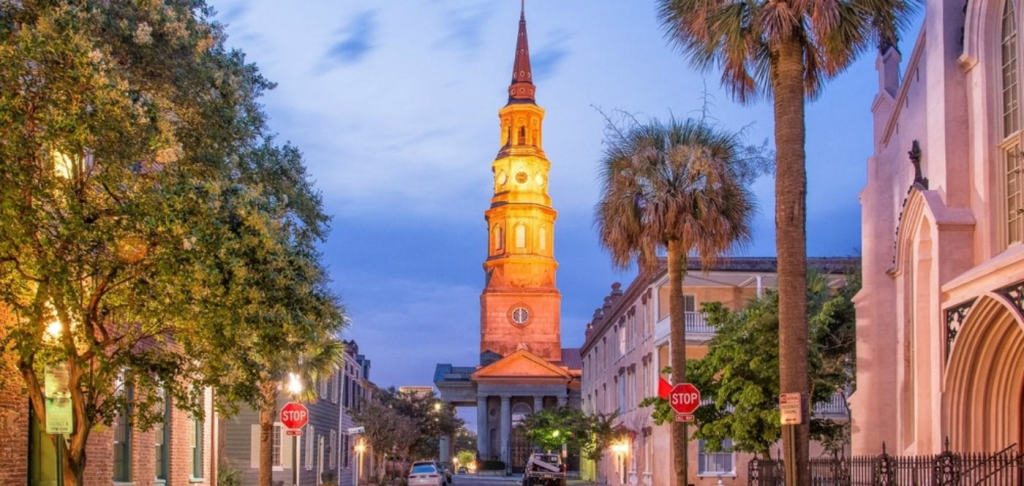
St. Philip’s Church, Charleston (Traveler of Charleston)

He left South Carolina in 1759 and became lecturer at St. James’s Aldgate in London. “Though that city abounded with first-rate preachers,” Ramsay continued, “his eloquence and piety attracted a large share of public attention.” Furthermore, and most relevant to this letter, “He was so much esteemed and beloved in Charlestown, that several of its inhabitants sent their children after him, and put them under his care and instruction at an academy which he opened near London.”3

“I have now been long waiting in anxious Suspense for an Answer to a Letter … upon very great Importance to me, and” which you should have received in October. “In the mean Tim, Henry writes, “I have determined with God’s Will to send my second son Henry to your school, and to board in your House.” Henry said he would send Henry in a couple of weeks aboard the Indian King, captained by Richard Baker, “a very careful kind Man.”

Upon his arrival at Cowes, Henry’s friends will convey him to London, but only after he has been “Innoculat[ed] for the Small Pox.” Henry adds that his brother, James, plans to send his wife’s nephew on the same ship.

Henry also had plans for his son, John, who would accompany him to England in “a Month or two longer.” Henry and John would depart for England that July, arriving at Falmouth on October 9 via Philadelphia.4 “Last night,” he wrote a London friend, after a Passage of 29 days …, I arrived here in good health, having in company with me … my eldest and youngest sons, and a Servant (an enslaved man named Scipio). The servant insisted on being called Robert Laurens while in England.5
  1. Henry Laurens to Richard Clarke, Charles Town, March 16, 1771, Papers of Henry Laurens, 7:457-458. ↩︎
  2. David Ramsay, History of South Carolina, From Its First Settlement in 1670 to the Year 1808 (Newberry, 1858), 250. ↩︎
  3. All quotes in this chapter, ibid. For his departure see, South Carolina Gazette, February 17, 1759. ↩︎
  4. Henry Laurens to Richard Clarke, Charles Town, March 16, 1771, Papers of Henry Laurens, 7:457-458. ↩︎
  5. Henry Laurens to William Cowles, Falmouth, October 10, 1771, Papers of Henry Laurens, 8:1. ↩︎
Today in Henry Laurens, February 24, 1756 (Part II)

Posted on 

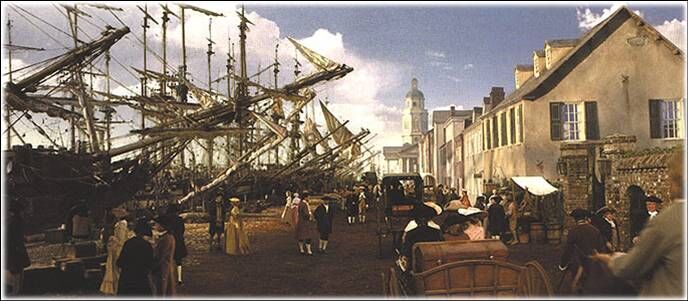
Still from the movie, The Patriot, showing Tradd Street (on the right) with some Hollywood CGI magic”

Today, Henry penned a letter to Mayne, Burn, & Mayne of Lisbon, Portugal, in response to their letter of November 22, 1755 (not found). However, Henry’s letter makes clear the subject of that letter.1

Henry expressed his joy that they “had escaped unhurt … in that shocking misfortune with which your City was attended the first of November.”

At 9:40 in the morning on the first of November, 1755, on the Feast of All Saints, a 7.7 earthquake (known as the Great Lisbon earthquake) rocked Lisbon. With its epicenter in the Atlantic Ocean, the quake caused a tsunami that engulfed Lisbon’s downtown area, causing significant flooding and a long-burning fire.

“It cannot be doubted,” Henry continued, “that your losses … must have been very great but then you are infinitely more happy than many others who must have lost their all & perhaps some of their Family or Friends.” Henry then imagined the devastation. “We are of the opinion,” he surmised, “this has been the most violent convulsion of the Earth that ever has happen’d…. The whole Atlantick Ocean we immagine must have been agitated as the Tide ebb’d and flow’d.”

In this moment, Henry must have contemplated the eight hurricanes that hit South Carolina in his lifetime, especially the Great Hurricane of 1752, from which the province had not yet recovered, physically or politically.

Fortunately, he noted, it was great news that “your Rice was preserv’d to help the distresses of the poor.

But, as was often the case with Henry, conversations always returned to commerce. “Crops of Rice this Year won’t exceed 70,000 Barrells,” he wrote, but “Last Year we ship’d 110,000 Barrels.” He then commented about the supply and demand of rice and wheat, before closing with a personal note.

“We wish you a return of many happy Years ’till the Memory of this fatal Catastrophe shall be totally effaced.” This is quintessential Henry Laurens. His business was personal. He carefully chose his business partners. They were honest men who could be relied upon and with whom he had cultivated caring personal relationships. Such connections, historian David Hancock has argued, were essential to integrating the 18th-century of the British-Atlantic.

  1. Henry Laurens to Mayne, Burn, & Mayne, Charles Town, February 24, 1756, Papers of Henry Laurens, 2:104-105. ↩︎